The V&T Corridor That Built Nevada Is Ready to Connect It Again
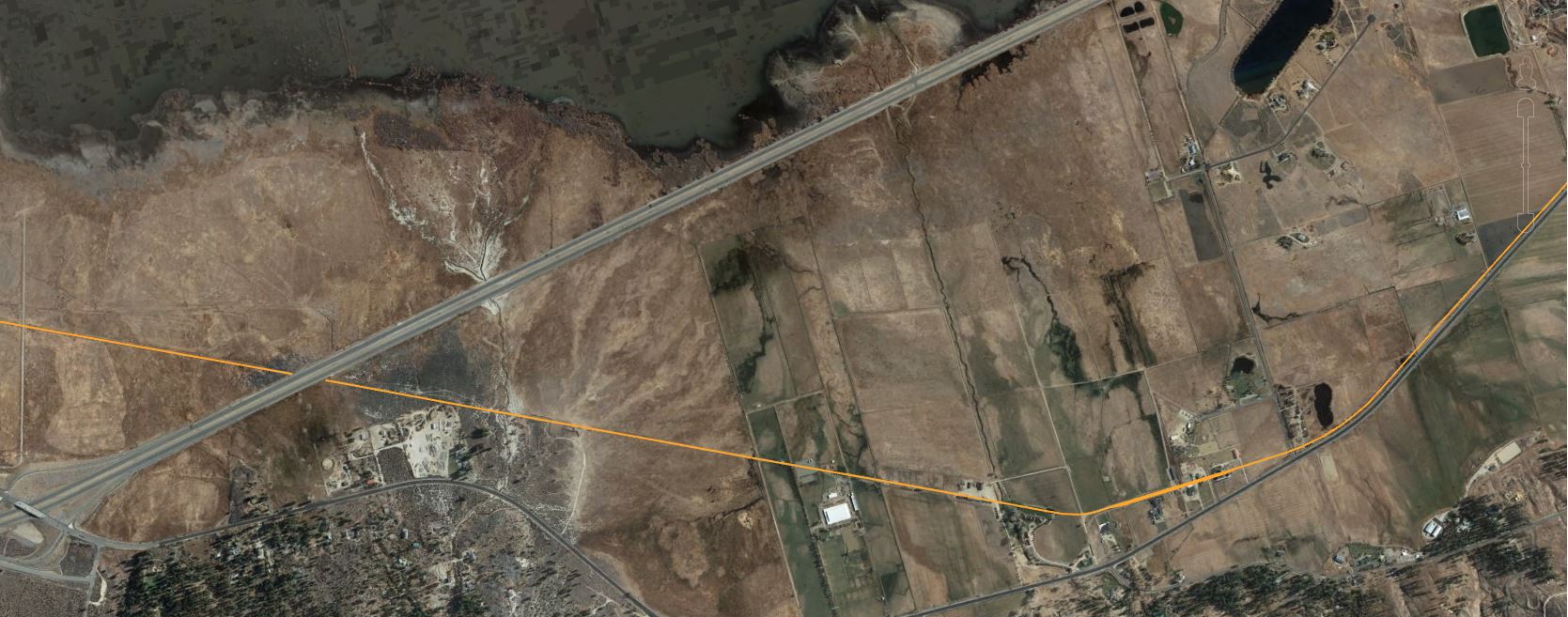
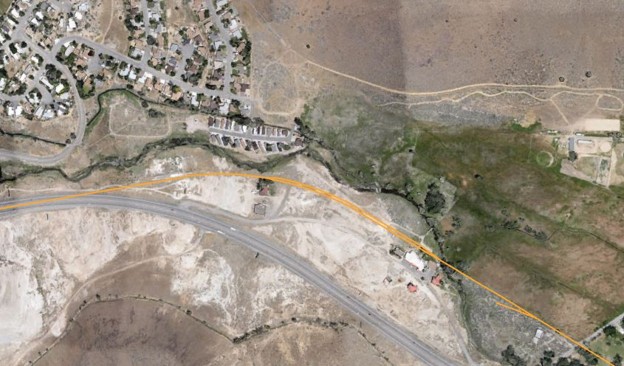
If you trace the path between Reno, Carson City, and the Carson Valley, you are following one of the most important economic corridors in the history of Nevada. (View the Historic V&T Railroad Alignment Maps hosted by Nevada Department of Transportation here.)
What began in 1868 as the Virginia & Truckee Railroad has evolved over more than 150 years. It has shaped communities, powered industries, declined, re-emerged, and now stands at the center of a new opportunity and the continuation of the ties that bound the region together.
The Railroad That Built a Region
The Virginia & Truckee Railroad was created with a clear purpose: to connect the Comstock mines of Virginia City down to processing mills along the Carson River and make large-scale mining economically viable. On the return trip, the V&T delivered enormous quantities of wood products required by the mines and the Comstock’s nearly 40,000 inhabitants.
By 1870, a rail line connected Carson City to Virginia City. By 1872, that line extended to Reno, linking the region to transcontinental rail service and opening Northern Nevada to national markets. These milestones are well documented through primary-source research compiled by railroad historian Stephen E. Drew and the Virginia & Truckee Railroad Historical Society.
The impact was immediate and profound.
The railroad dramatically reduced transportation costs, allowing lower-grade ores to be processed profitably and sustaining the mining economy far longer than would have otherwise been possible. It carried not only ore, but also lumber, mining timbers, fuel, and essential supplies back to the mines.
At its peak, the Virginia & Truckee (V&T) was generating extraordinary returns. In the 1870s, stockholders received dividends in excess of $100,000 per month, while the railroad employed hundreds of workers and supported dozens of affiliated businesses across Nevada and Eastern California.
It funded the development of towns, supported industries from lumber to manufacturing, and created a network of economic activity that extended far beyond its tracks, throughout Western Nevada and Eastern California.
Not just a railroad, the V&T was a regional economic engine.
More Than Transportation
In Carson City, the Virginia & Truckee built large-scale shop facilities that became a hub of industrial production and repair. According to historical records, these shops handled both railroad operations and outside commercial work, producing everything from mining equipment to structural components for businesses and public infrastructure.
At times, outside work accounted for a meaningful share of the railroad’s profits, reinforcing its role not just as a transportation provider but as an industrial center serving the broader region.
The corridor both moved goods and supported the industries that produced them.
A Connected Region
As the railroad expanded, it linked a series of communities that still define Northern Nevada today. From Reno through Washoe Valley and into Carson City, and south toward Minden, the line passed through places like Franktown, Washoe City, and Steamboat Springs; connections documented through historical society records and publications such as Spurs and Sidings of the V&T by Stephen E. Drew, Stanford University’s The Barry Lawrence Ruderman Map Collection and Virginia & Truckee: A Story of Virginia City and Comstock Times by Lucius Beebe and Charles Clegg.
For decades, the railroad was the most efficient and reliable way to move people, freight, express, and mail between these communities.
It wasn’t optional infrastructure. It was essential to the region’s growth.
Decline and Transformation
By the early 1920s, new transportation systems began to reshape the region.
With the construction of modern highways, including what is now U.S. Highway 395, travel shifted from rail to road. The highway closely paralleled the railroad and ultimately contributed to its decline, along with the rise in trucks, buses, and personal automobiles.
By the late 1930s, the railroad had entered receivership after years of financial losses exceeding hundreds of thousands of dollars, and after 80 years of operation, the final revenue train ran in 1950.
The tracks were eventually removed, and the corridor was divided among private, public, and federal landholders.
However, the path itself remained.
A Corridor Reclaimed
Beginning in the 1970s, preservationists recognized the enduring value of the Virginia & Truckee corridor and began rebuilding portions of the line in Virginia City. These early efforts laid the groundwork for broader restoration initiatives.
In 1991, the State of Nevada established the Nevada Commission for the Reconstruction of the V&T Railway to restore portions of the line for heritage tourism and education.
Public investment followed. With support from leaders, including then-NV Senator Harry Reid, significant federal funding was secured to rebuild key segments of the corridor.
By 2009, trains once again operated between Virginia City and the Carson City area for the first time in more than 60 years, demonstrating both public interest and the continued viability of the corridor as an economic and cultural asset.
Today, the Virginia & Truckee Railroad Company operates a heritage railway that contributes to the tourism economy of Northern Nevada, supported in part by interpretation and preservation efforts at the Nevada State Railroad Museum.
The corridor proved something important.
It still works.
The Trail That Reconnects the Region
In 2008, a new effort began to look at the corridor not just as history, but as opportunity.
By 2017, the Historic Virginia & Truckee Trail organization formally launched its mission to locate remaining sections of the original rail bed and reconnect them into a continuous, multi-use trail.
The vision is both simple and ambitious:
To connect Reno to Gardnerville and Virginia City through a unified corridor that:
- Follows the historic route wherever possible
- Promotes alternative transportation
- Provides access to open space and public lands
- Attracts tourism and supports local economies
- Preserves and shares the history of the Virginia & Truckee Railroad
State-level support has followed. In 2019, then-Governor Steve Sisolak signed Assembly Bill 84, allocating $217 million for conservation and natural resource funding, including support for projects such as the Historic V&T Trail.
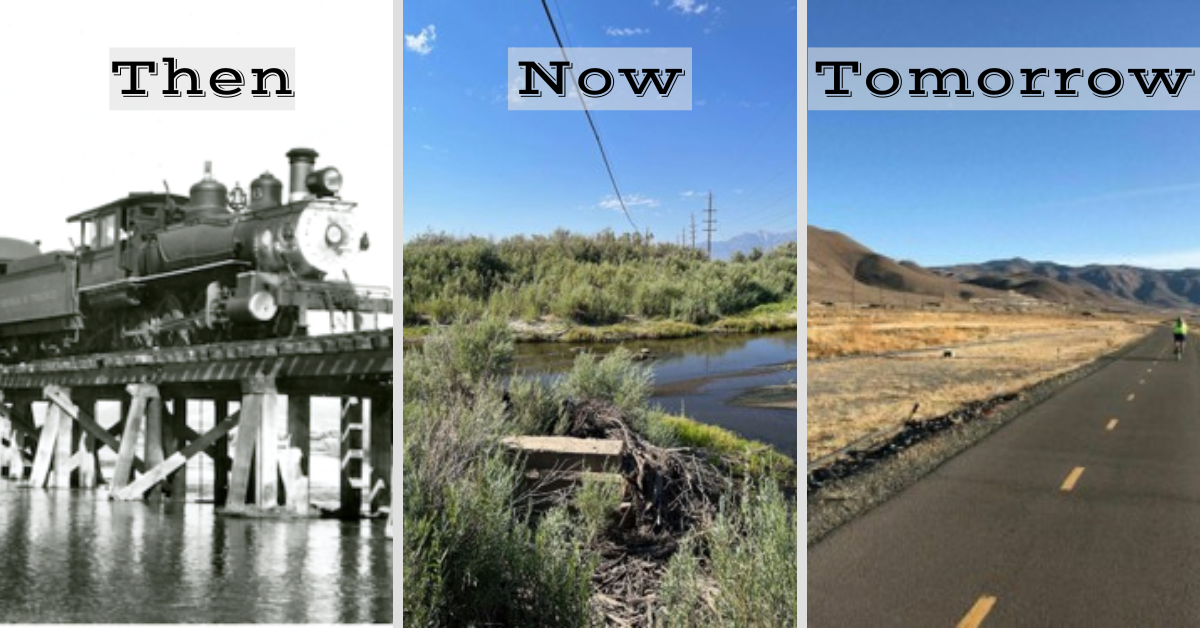
This trail is not recreating the past – it is building on it for the future of multi-use connectivity.
A Proven Model for the Future
Skepticism around large-scale projects is natural. Questions about cost, feasibility, and impact are part of responsible planning.
But this corridor offers something rare.
It has already proven its value multiple times.
- First, as a railroad that built a regional economy.
- Then, as a restored heritage line that attracts tourism and public investment.
- Now, as a trail, it represents the next phase in that evolution.
Across the country, rail-to-trail projects have demonstrated measurable economic benefits, from increased visitation to support for local businesses. [LINK TO ECONOMIC IMPACT POST] This corridor is uniquely positioned to do the same because it already connects the communities, landscapes, and history that people want to experience.
A Corridor With a Future
The Virginia & Truckee Railroad shaped Northern Nevada in ways that are still visible today:
- By creating connections that define the region
- By supporting industries that built communities
- By leaving behind a corridor that still has the potential to serve.
The question is not whether the historic V&T Railroad corridor mattered.
The question is what we choose to do with it now.
Be Part of What Comes Next
The Historic Virginia & Truckee Trail Association is working to reconnect this corridor for future generations. Here’s how you can be a part of this amazing project: