Yesterday, Today and Tomorrow
When people think about the Virginia & Truckee Railroad, they often picture Virginia City, Carson City or Reno.
But between those larger destinations were smaller places that played an important role in keeping the region moving.
Franktown was one of those places.
Located in Washoe Valley, Franktown sat along the V&T line between Reno and Carson City. Today, the landscape is quieter than it was during the height of the Comstock era. There are ranches, open fields, homes, roads and the familiar presence of Washoe Lake nearby.
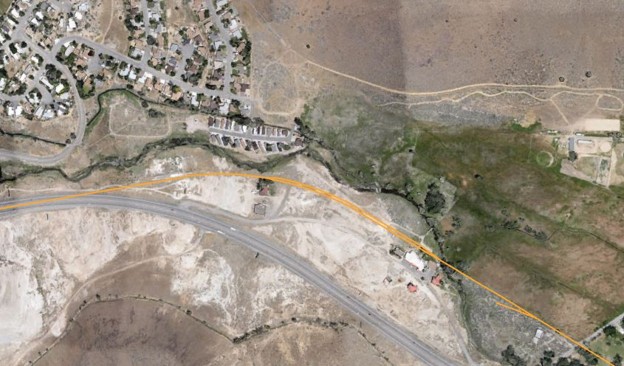
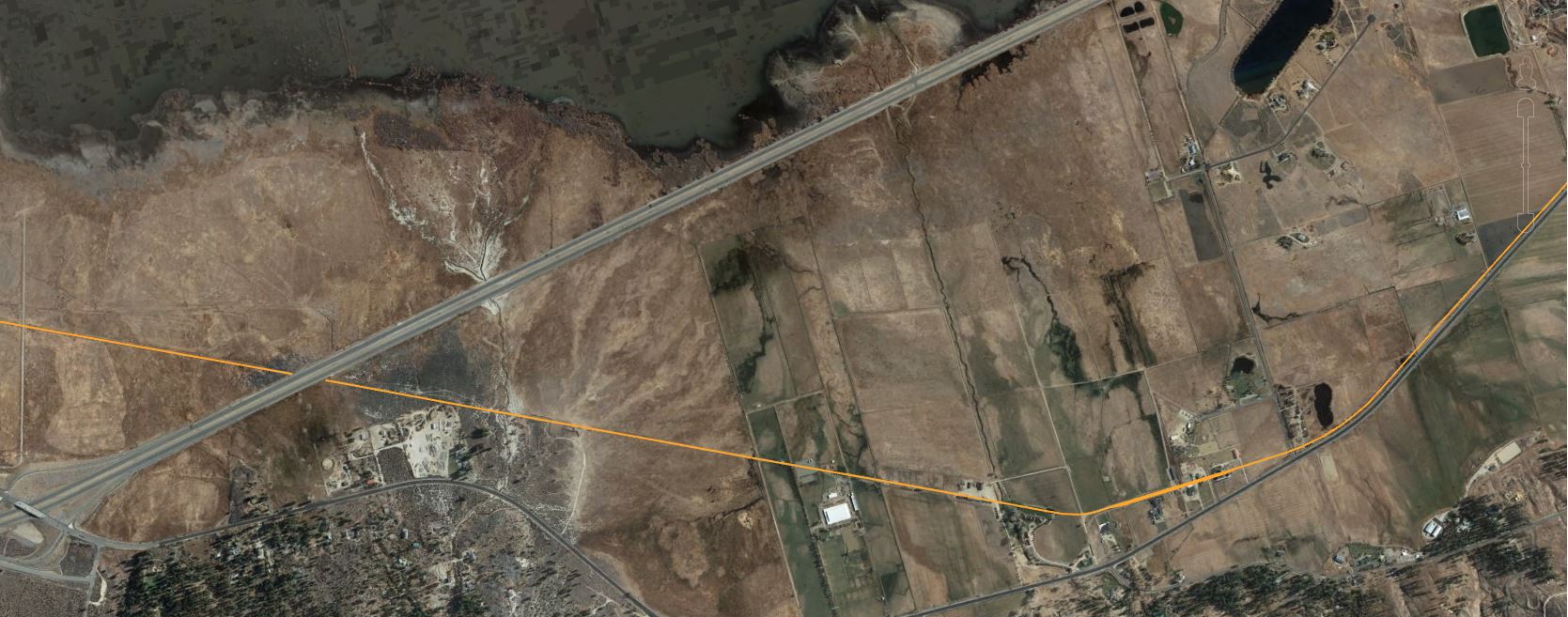
But when the historic rail alignment is placed over a modern map, the story becomes easier to see.
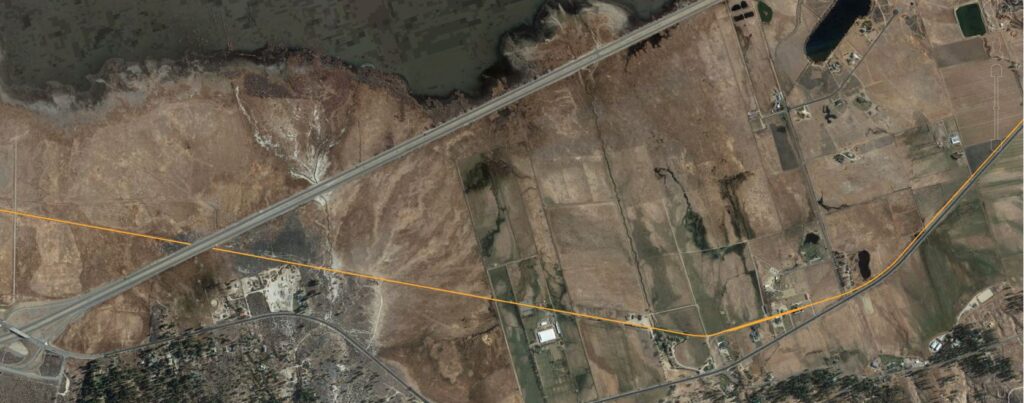
Aerial photo courtesy of Nevada State Railroad Museum
The yellow line shows where the Virginia & Truckee Railroad once moved through today’s Franktown area. It is a reminder that this rural stretch of Washoe Valley was once part of a much larger system of transportation, industry and community life.
Yesterday: A Working Community in Washoe Valley
Franktown was founded in 1855 by Orson Hyde, who served as probate judge of Carson County, Utah Territory. At that time, Nevada was not yet a state, and Washoe Valley was still part of a rapidly changing western landscape.
The valley’s location made it important. It sat between the Sierra Nevada, Carson City, Reno and the mining districts that would soon transform the region. Water, timber, farmland and transportation access all shaped Franktown’s early development.
After the discovery of the Comstock Lode in 1859, the demand for timber grew quickly. Mines needed wood for fuel, construction, shoring and milling operations. Franktown became part of that supply chain.
A sawmill in Franktown became an important enterprise, furnishing timber to the Comstock mines. The area was also home to the Dall Mill, a sixty-stamp quartz mill that employed hundreds of workers. Farms surrounded the town, giving Franktown an agricultural role as well as an industrial one.
In other words, Franktown was not just a small settlement along the way. It was a working community connected to some of the most important economic activities in Nevada’s early history.
The Railroad’s Role
The V&T is often remembered for its connection to the Comstock, but its importance extended beyond mining alone. It connected communities, supported local economies and helped shape the region’s development.
Franktown Depot became a vital stop on the line between Reno and Carson City. The railroad passed through this part of Washoe Valley, linking Franktown with nearby places, including Bowers and Ophir.
That connection mattered. The depot, mills, farms and surrounding community were all part of a transportation corridor that served both local needs and regional commerce.
The railroad also changed the economic balance of the area. As transportation routes improved and milling activity shifted, Franktown’s early industrial importance began to decline. Like many communities tied to the boom years of the Comstock, its busiest chapter did not last forever.
But the corridor remained.
That is the important part for us today. Even when the trains stopped running and the landscape changed, the route itself continued to tell a story.
Today: A Rural Landscape With History Still Visible
Today, Franktown looks very different from the busy mill-and-depot community it once was.
The area is now defined by open land, ranch properties, rural roads, private parcels, nearby parks and the west side of Washoe Valley. Bowers Mansion, Wilson Common Park Pond, Olde Lyfe Alpacas, Toiyabe Golf Club and the broader Washoe Lake landscape are all part of the modern map.
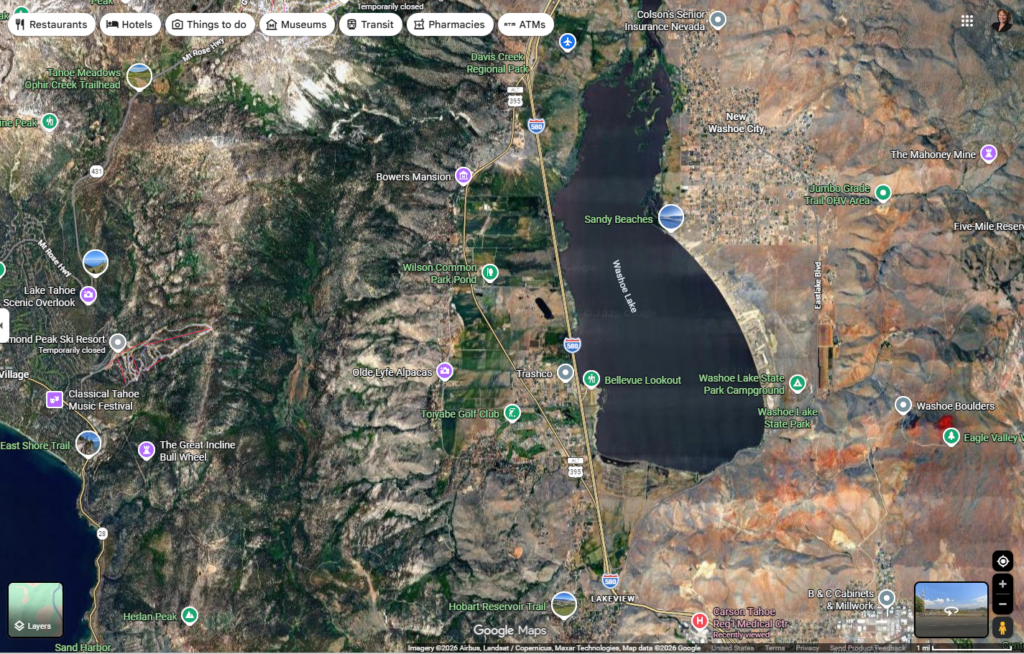
Google Maps screenshot
People traveling through the area today may notice the open fields, the foothills, the lake and the highway corridor. What they may not realize is that they are moving through a place once directly tied to the V&T Railroad and the Comstock economy.
That is why the map is so helpful.
When the historic railroad alignment is overlaid onto today’s landscape, it becomes easier to understand how Franktown fit into the larger story. The rail line did not cut across Washoe Lake. It moved through the west side of the valley, near the places where people lived, worked, milled timber and moved goods.
The landscape has changed, but the relationship between geography and movement is still there.
Franktown also helps show why historic corridors matter. They are not always obvious from the road. They may run through fields, past homes, near old community sites or across land that has taken on new uses. But they still hold the memory of how the region developed.
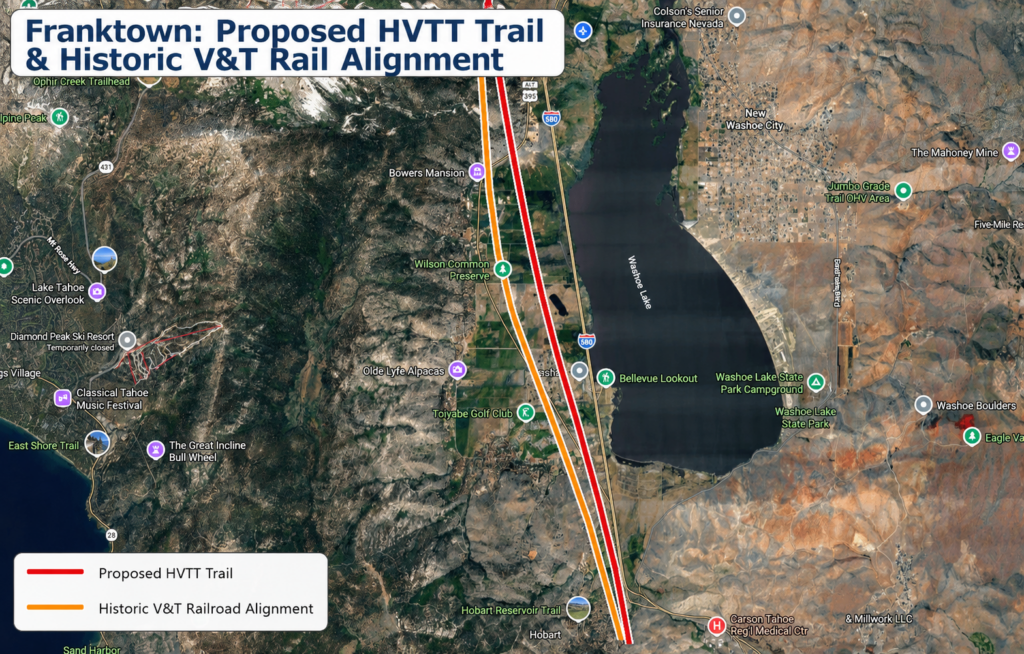
AI-generated image showing the proposed HVTT trail and the V&T railway alignment
Tomorrow: Reconnecting the Corridor
The future of the Historic Virginia & Truckee Trail is about connection.
In the Franktown area, future trail planning will require careful thought, partnership and respect for the land as it exists today. Some potential options being explored include a multi-use trail across the section associated with the Winters Ranch easement managed by the Bureau of Land Management or a possible alignment along the east side of I-580.
The goal is simple but important: create a safe trail connection between the Carson City section and Veterans Parkway.
That connection would help turn individual trail segments into a more complete regional system. It would bring the Historic V&T Trail closer to the long-term vision of linking communities along the old railroad corridor.
In a place like Franktown, that future connection is especially meaningful.
Yesterday, this corridor moved timber, freight, workers, passengers and supplies through Washoe Valley.
Today, it passes through a rural landscape shaped by history, private property, public land, transportation infrastructure and open space.
Tomorrow, it could help residents and visitors move safely through the valley again, this time by foot, bike or other non-motorized travel.
Why Franktown Matters
Franktown matters because it reminds us that the V&T story is not only about the big destinations.
It is also about the stops in between.
It is about the sawmills, farms, depots and working communities that supported the larger economy. It is about the people who lived and worked along the corridor. It is about the places that may look quiet today, but once played an active role in building Northern Nevada.
The Historic Virginia & Truckee Trail gives us a chance to bring those places back into public memory.
A completed trail would not just provide recreation. It would help tell the story of how this region grew, how communities were connected and how transportation shaped the landscape we know today.
Franktown’s chapter of the V&T story is a reminder that history is not always found in a single preserved building or a well-known destination.
Sometimes it is found as a line on a map.
And sometimes, that line can help point the way forward.