Yesterday, Today and Tomorrow
When you look at a current aerial map of Steamboat Springs, it is easy to see roads, homes, open land, creek corridors and modern development.
What is harder to see, unless someone points it out, is the history still running through the landscape.
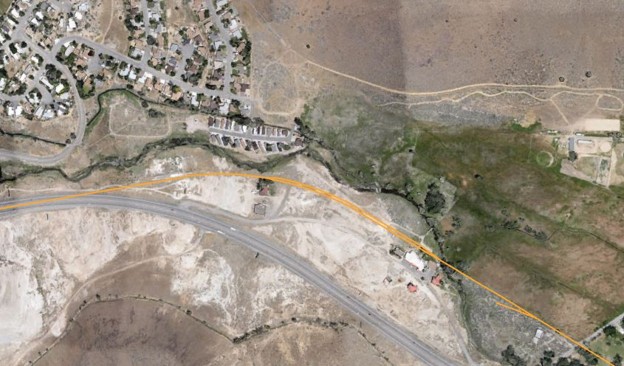
Photo courtesy of Nevada State Railroad Museum
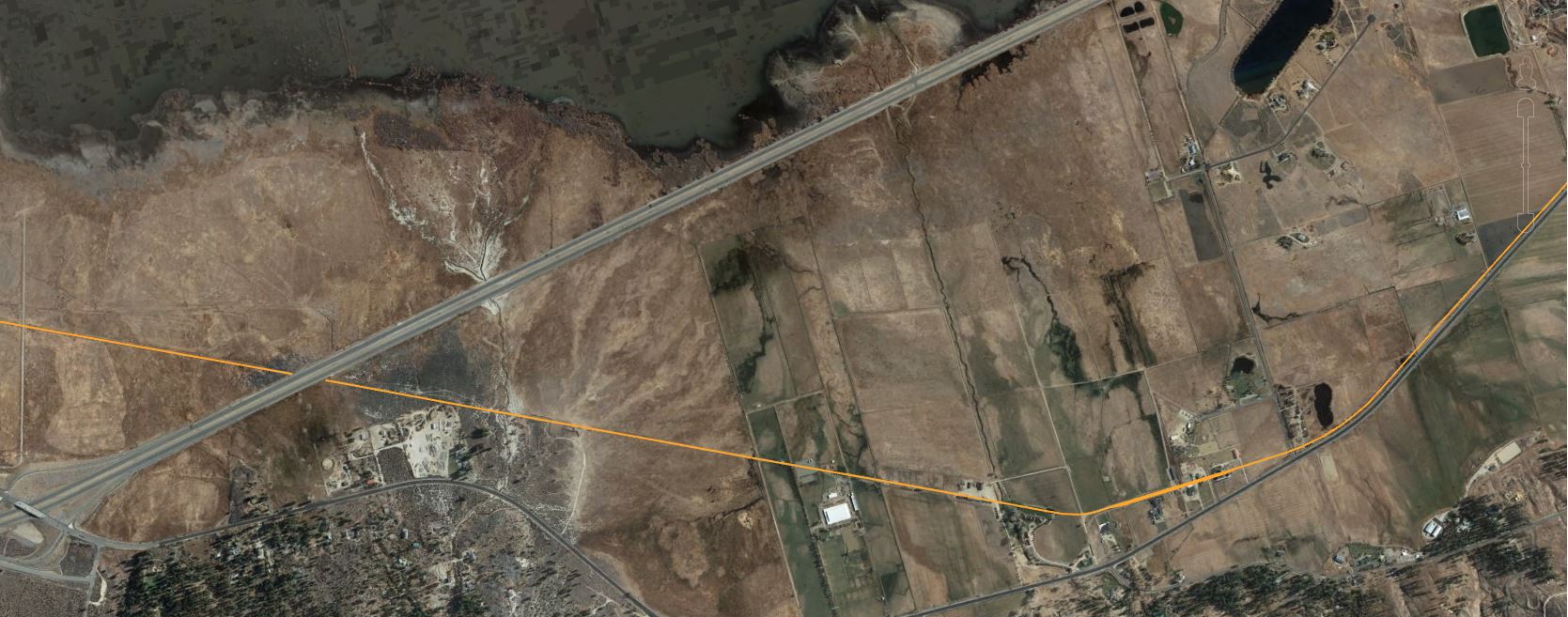
The orange line on the map follows the historic Virginia & Truckee Railroad corridor through the Steamboat Springs area. At first glance, it may look like a simple line across a satellite image. But that line represents more than a former rail route. It connects us to one of Northern Nevada’s most important stories: the movement of people, supplies, freight, tourism and opportunity through this region.
Steamboat Springs is a place where the past, present and future of the Historic Virginia & Truckee Trail come together in a very visible way.
Yesterday: A Place of Steam, Water and Movement
Long before this area was shaped by highways and neighborhoods, Steamboat Springs was known for its natural hot springs.
Early travelers saw steam rising from the ground and heard the bubbling, puffing and rumbling of the springs. The sound reminded them of a steamboat, giving the area its name.
By the 1860s, Steamboat Springs had become a destination. People traveled to the area for the mineral waters, and the springs developed into one of Northern Nevada’s early resort sites. Bathhouses, lodging and wellness-related uses helped make Steamboat more than a geographic point on a map. It became a place people visited intentionally.
Then came the Virginia & Truckee Railroad.
The V&T was built to serve the needs of the Comstock, connecting Virginia City, Carson City, Reno and the surrounding communities through one of the most important rail corridors in Nevada history. When the line reached Steamboat Springs in 1871, the area took on a new role.
For a time, Steamboat became a transportation terminal. Materials tied to the Comstock mines were brought by rail to this point, then transferred to freight wagons for the climb toward Virginia City. People, goods and supplies moved through this corridor as part of the larger economic system that helped build Northern Nevada.
Once the tracks farther south were completed, Steamboat no longer needed to serve that same transfer function. But its role as a destination continued. During the Comstock boom years, the springs remained a popular stop for visitors and residents alike. (History from Nevada State Preservation Office)
That is what makes this section of the corridor so interesting. Steamboat Springs was not only a place people passed through. It was a place people came to.
Today: A Changed Landscape With History Still in Place
Today, the Steamboat Springs area looks very different than it did during the height of the V&T era.

| Screenshot, Google Maps |
The landscape now includes modern roads, nearby neighborhoods, open land, businesses, creek habitat and developed corridors.
Many people pass through the area without realizing they are traveling near a route that once helped connect Reno, Carson City, Virginia City and the Comstock.
But when the historic rail line is overlaid on a current map, the story becomes easier to see.
The old corridor is still present in the shape of the land. It follows the natural movement of the valley, traces the edge of hills and waterways, and reminds us that transportation routes are often built around the same geography, generation after generation.
Steamboat Hot Springs still carries part of that history forward today. The mineral springs remain one of the most recognizable links between the area’s past and present. Around them, the region has continued to evolve, but the name, the place and the story remain.
This is one of the reasons mapping is so valuable for the Historic Virginia & Truckee Trail. Maps help people understand that the trail is not being imagined from nothing. It follows a corridor with deep roots in the region’s history.
The railroad may be gone from this section, but the corridor is not.
Tomorrow: Reconnecting a Historic Corridor
The future of the Historic Virginia & Truckee Trail is about reconnection.
It is about reconnecting communities. Reconnecting people to history. Reconnecting residents and visitors to the landscape. And in places like Steamboat Springs, it is about helping people see what has always been there.
A completed trail through this corridor would give people a new way to experience a place that has been part of Northern Nevada’s story for more than 150 years. Instead of simply driving past, people could walk, ride, pause, look around and understand the layers of history beneath their feet.
The trail also gives this historic transportation corridor a modern purpose.
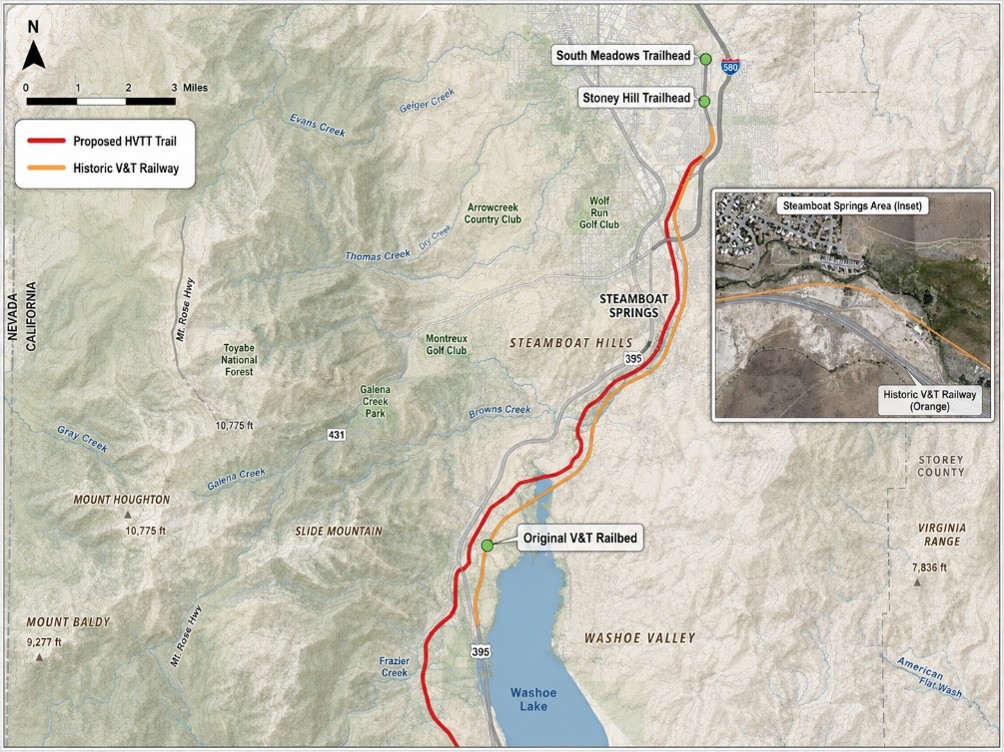
AI-generated map overlay of our current trail plan from Washoe Valley to Steamboat Springs.
Yesterday, the V&T moved passengers, freight and mining materials through the region.
Today, the corridor runs through a changing landscape shaped by growth, roads, homes, open space and remaining historic landmarks.
Tomorrow, the Historic Virginia & Truckee Trail can help transform that same corridor into a safe, accessible connection for recreation, transportation, tourism and education.
That is the power of this project.
It is not just about building a path. It is about bringing a historic route back into public awareness and giving it new life for future generations.
Why Steamboat Springs Matters
Steamboat Springs is a reminder that history is not always locked away in museums or preserved only in buildings. Sometimes, it is visible in the shape of a hillside, the curve of a creek, the path of an old railbed or a line drawn across a modern map.
When we look closely, we can still see how people moved through this region. We can see how communities were connected. We can see how transportation shaped growth, commerce and tourism.
The Historic Virginia & Truckee Trail gives us a chance to carry that story forward.
Steamboat Springs has always been a place of movement, from steam rising out of the ground to trains moving through the valley to today’s roads and neighborhoods.
The next chapter is about connection.
And the trail is how we begin to see it again.